Canada
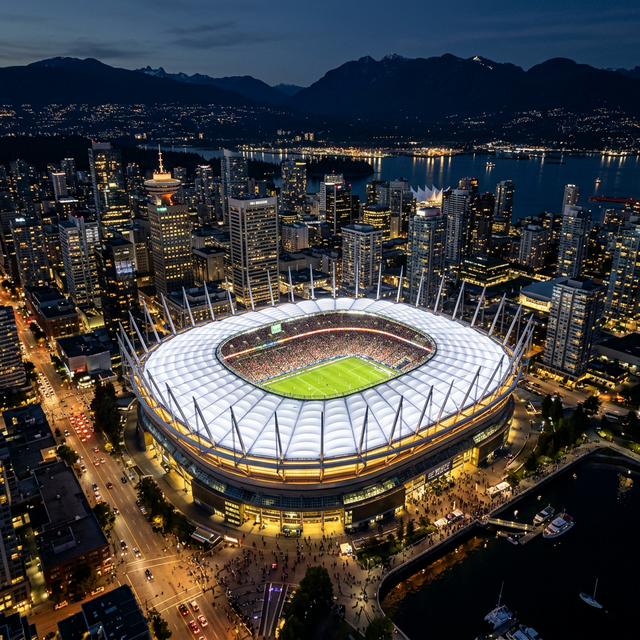
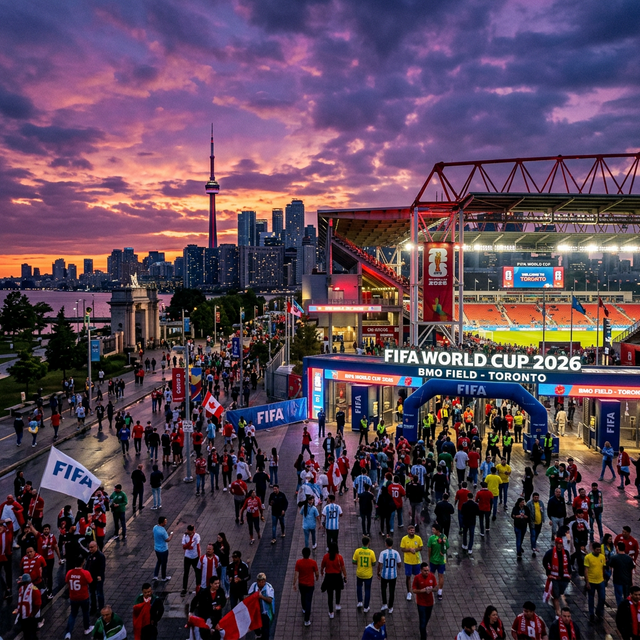
First World Cup appearance at home soil. Vancouver (BC Place, 54,500) and Toronto (BMO Field, 45,000) host Group Stage and Round of 16 matches.
The largest World Cup in history. 48 teams. 104 matches. Three nations — Canada, USA and Mexico. Vancouver and Toronto host matches for the first time ever.
For the first time in history, the World Cup is co-hosted by three countries across two continents.
First World Cup appearance at home soil. Vancouver (BC Place, 54,500) and Toronto (BMO Field, 45,000) host Group Stage and Round of 16 matches.
11 host cities including the final venue — MetLife Stadium, New York/New Jersey (capacity 82,500). Previous host in 1994 with a record 3.6M attendance.
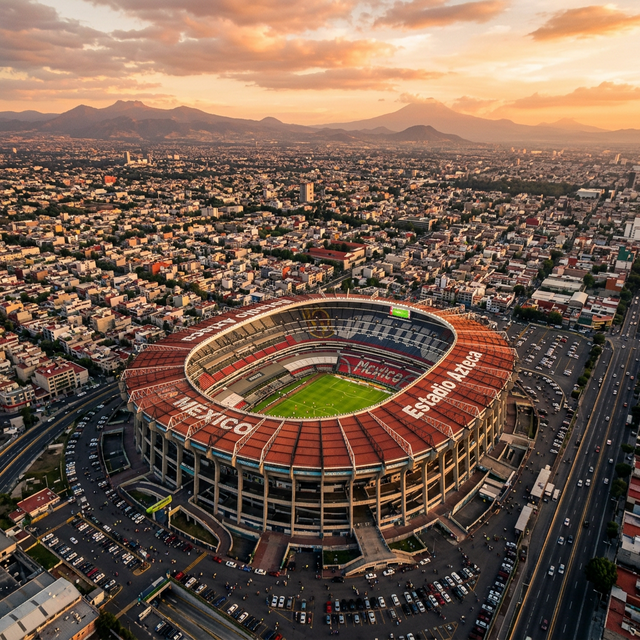
Third time hosting the World Cup (1970, 1986, 2026) — a unique record. Azteca Stadium in Mexico City is the only stadium to host two World Cup Finals (1970 and 1986).
The expanded format gives 16 more nations a chance at World Cup glory. Each group winner and runner-up advance automatically.
 USA+600
 Saudi Arabia+900
 Australia+1200
 South Korea+1400
 Brazil+400
 Uruguay+700
 Colombia+900
 Canada+1800
 Germany+550
 Netherlands+700
 Belgium+900
 Sweden+1100
 France+450
 Portugal+650
 Morocco+1000
 Senegal+1400
 Argentina+500
 Mexico+2200
 Ecuador+1800
 Japan+1200
 Spain+550
 Italy+700
 Croatia+1000
 Algeria+1600
 England+600
 Nigeria+1500
 Poland+1300
 Denmark+800 Portugal+600
 Cameroon+2000
 Tunisia+1800
 Switzerland+900 Netherlands+550
 Ghana+1600
 Serbia+1400
 Austria+1100 Brazil+400
 Chile+1400
 Peru+1600
 Ivory Coast+1800
Germany+500
Ivory Coast+1800
Germany+500 Scotland+1400
 Turkey+1100
 Kazakhstan+3000 France+450
 Burkina Faso+2500
 Greece+1600
 New Zealand+2200
Averaged odds from top Canadian sportsbooks — DraftKings, BetMGM, FanDuel. Updated March 2026.


Canada qualified for just one World Cup before 2022 — in 1986, where they lost all three matches and did not score a goal. In 2022, they returned after 36 years, finishing 3rd in CONCACAF qualifying. As a host nation in 2026, they receive automatic qualification and will play at BC Place in Vancouver in front of a home crowd for the first time in 40 years.
Key players to watch: Alphonso Davies (Bayern Munich), Jonathan David (Lille, top scorer in Ligue 1), and goalkeeper Maxime Crépeau (LA Galaxy). The squad average age is 24.8 — one of the youngest in the tournament.
Canada Full Guide →| Date | Match | Venue |
|---|---|---|
| Jun 13 | Canada vs TBD | BC Place, Vancouver |
| Jun 18 | Canada vs TBD | BC Place, Vancouver |
| Jun 23 | Canada vs TBD | BMO Field, Toronto |
From BC Place in Vancouver to the Estadio Azteca in Mexico City — the largest collection of World Cup venues ever assembled.
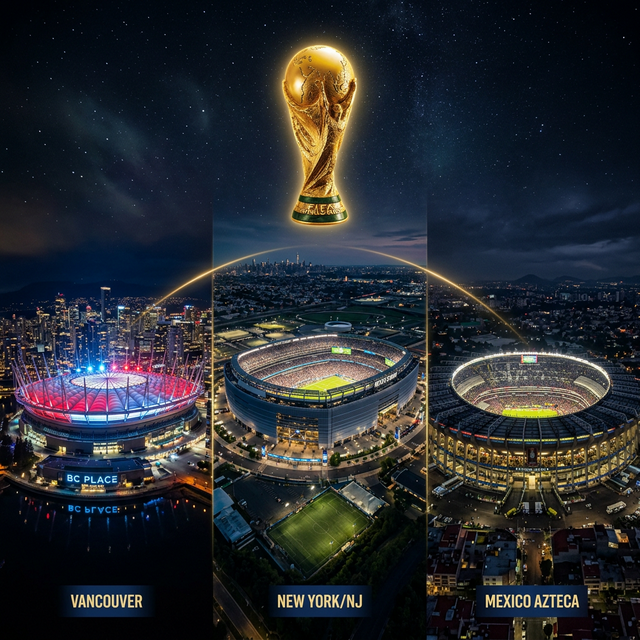
Mexico City, Azteca Stadium. Tournament kicks off with the traditional host-nation opener.
BC Place, Vancouver. Canada play their opening Group Stage match at home for the first time since 1987 (Confederations).
Top 2 from each group + 8 best 3rd-place teams. 32 teams advance from the group stage.
16 teams remain. Matches spread across all three nations.
8 teams. USA stadiums host all quarter-final matches.
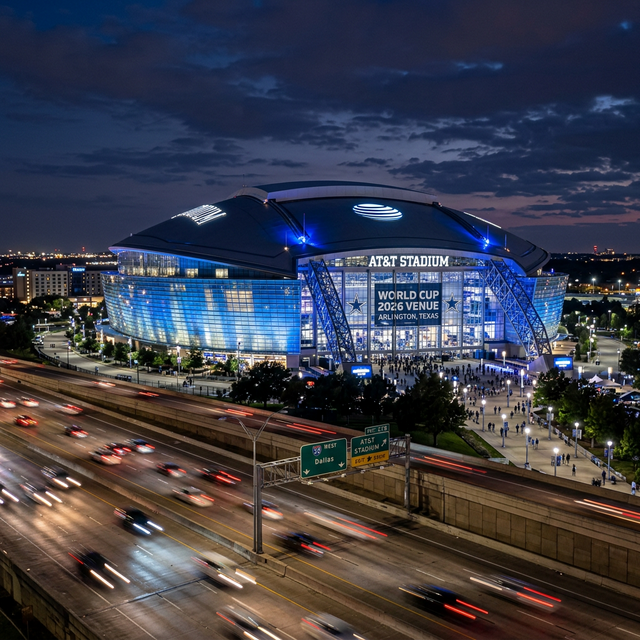
AT&T Stadium (Dallas) and Rose Bowl (Los Angeles) host the final four.
Hard Rock Stadium, Miami.
MetLife Stadium, East Rutherford, New Jersey. Capacity: 82,500.
| Nation | Titles | Last Win | Host Years | 2026 Odds | Group 2026 |
|---|---|---|---|---|---|
| Brazil |
🏆 5 | 2002 | 1950 | +400 | B |
| Germany |
🏆 4 | 2014 | 1974, 2006 | +550 | C |
| Italy |
🏆 4 | 2006 | 1934, 1990 | +700 | F |
| Argentina |
🏆 3 | 2022 | 1978 | +500 | E |
| France |
🏆 2 | 2018 | 1998 | +450 | D |
| Spain |
🏆 1 | 2010 | — | +550 | F |
| England |
🏆 1 | 1966 | 1966 | +600 | G |
| USA |
🏆 0 | — | 1994, 2026 | +600 | A |
| Canada |
0 | — | 2026 | +1800 | B |
The 2026 FIFA World Cup opens on June 11, 2026 in Mexico City. The tournament runs until July 19, 2026, when the Final takes place at MetLife Stadium in East Rutherford, New Jersey (82,500 capacity). Total duration: 39 days.
Two Canadian cities host matches: Vancouver (BC Place, 54,500 seats) and Toronto (BMO Field, 45,000 seats). Vancouver hosts the Canada group matches plus Round of 16 games. Toronto hosts additional group stage fixtures. Together they stage 13 matches.
48 teams compete in 2026, up from 32 in previous tournaments. They are split into 12 groups of 4 teams. The top 2 from each group advance automatically (24 teams), plus the 8 best third-place finishers — giving 32 teams in the Round of 32.
Canadian broadcast rights are primarily held by TSN and CTV (English) and RDS and TVA Sports (French). All matches will be available with a Canadian cable or streaming subscription. Free over-the-air coverage is expected on CTV for selected matches, as in 2022.
Canada's current odds are around +1800 — roughly a 3% implied probability. Reaching the Round of 16 is a realistic goal. The squad has genuine quality: Alphonso Davies plays for Bayern Munich, Jonathan David finished top scorer in Ligue 1 in 2024/25. Home crowd advantage at BC Place is real, as seen in other host nation runs (France 1998, South Korea 2002, Germany 2006). Winning the tournament would be the biggest upset in its 96-year history.
Brazil (+400) leads the markets, followed by France (+450) and Argentina (+500). Germany, Spain and England cluster around +550–+600. USA, as a co-host with strong CONCACAF form, sits at +600. Portugal, with Rúben Neves and Bernardo Silva as the new generation post-Ronaldo, is at +650.
The 2026 FIFA World Cup breaks from every previous edition in three ways. First, it is the first tournament with 48 teams instead of 32, adding 16 nations and 40 extra matches. Second, three nations co-host across 16 cities — the most geographically spread tournament ever staged. Third, it returns to North America exactly 32 years after the famously well-attended 1994 edition, which drew 3.6 million spectators across 52 matches.
Canada last appeared in a World Cup in 1986, where they played three Group Stage matches, lost all three, and scored zero goals. The 2022 Qatar World Cup changed the narrative: Canada qualified for the first time in 36 years, took a lead against Belgium in their opening match (lost 1-0), beat Morocco on points before elimination, and showed a generation of players built in Europe's top leagues. In 2026, automatic qualification as a host nation removes the pressure of qualifying; the goal is reaching the Round of 16 in front of a home crowd. Full Canada World Cup guide →
The expanded format was approved by FIFA in 2016 and first implemented in 2026. Each confederation gets more spots: CONMEBOL keeps its traditional 6, UEFA goes from 13 to 16, CAF (Africa) moves from 5 to 9, AFC (Asia) from 5 to 8. The practical effect is that nations like Canada, New Zealand, Saudi Arabia and Morocco — who qualified for 2022 — now face a wider field in 2026. The group stage plays out as before; the change starts at the Round of 32, which replaces the traditional Round of 16 as the first knockout round.
For Canadians travelling to matches, BC Place in Vancouver is the most accessible. It hosted the 2015 Women's World Cup Final and is familiar to MLS fans as home of the Vancouver Whitecaps. BMO Field in Toronto was expanded to 45,000 for this tournament and hosts the Canada group matches viewable from downtown Toronto hotels. For those crossing into the USA, Seattle's Lumen Field, San Francisco's Levi's Stadium and Seattle's facilities are closest to the BC border. MetLife Stadium in New Jersey hosts the Final — flights from Vancouver to Newark run direct with Air Canada. See all 16 stadiums →